What to Expect from Advanced Implant Dentistry at a Dental Clinic in Jayanagar
Missing teeth can affect more than how your smile looks. Tooth loss may make it hard to chew, change the way you speak, affect how your bite works, and even lead to changes in the jawbone over time.
Dental implants offer a way to replace missing teeth by creating a base for a dental restoration. Not every patient has the same amount of bone or the same jaw structure. That is where advanced implant dentistry becomes important.
At iLUMNA Dental clinic in Jayanagar, implant treatment can include detailed diagnosis, three-dimensional imaging, personalized treatment planning, implant placement, healing, and the final restoration. For patients with bone loss, conventional implants and bone grafting are not the only options. Depending on the anatomy, advanced methods like zygomatic, pterygoid, nasal implants might also be used.
Understanding these treatment options can help you have a conversation with your dentist about replacing missing teeth.
What Is Advanced Implant Dentistry at a Dental Clinic in Jayanagar?
Advanced implant dentistry focuses on replacing missing teeth using implant-based solutions that are planned based on the patient’s anatomy and oral health.
A conventional dental implant is placed into the jawbone and acts as an artificial tooth root. After healing and integration with the surrounding bone, it can support a crown, bridge, or other dental restoration.
Conventional implant placement does not work the same way for every patient. Bone volume, bone quality, gum health, bite, location of missing teeth, and the position of anatomical structures all influence treatment planning.
Advanced implant dentistry becomes especially important when a patient has:
- Jawbone loss
- Severe upper-jaw bone atrophy
- Multiple missing teeth
- Previously failed implants
- Limited bone for conventional implant placement
- Complex anatomical conditions
- A need for full-arch implant rehabilitation
The goal is not just to place an implant. It is to choose the treatment approach based on the patient’s specific anatomy.
Why Is Treatment Planning Important for Advanced Implant Dentistry?
Successful implant treatment starts with planning.
Before recommending an implant technique, a dentist must understand the available bone, the location of anatomical structures, the position of the planned restoration, and the patient’s overall oral condition.
A detailed assessment may include:
- The number and location of missing teeth
- Available bone volume and quality
- Gum health
- Position of neighbouring teeth
- Bite and jaw relationship
- Sinus and nasal anatomy where relevant
- Space available for the restoration
- Previous dental treatments
- Overall oral health
Three-dimensional imaging such as CBCT may be especially important in complex implant cases. It allows the dental team to examine the anatomy from different angles and plan the implant placement more precisely.
This is especially true when advanced implants are being considered. For example, ITI recommendations for zygomatic implants stress the need for three-dimensional assessment of the maxillary and zygomatic bone, as well as evaluation of the sinus and surrounding anatomy.
How Does a Dental Clinic in Jayanagar Assess Your Implant Needs?
Your first implant consultation usually involves more than looking at the visible gap left by a missing tooth.
Reviewing Your History
Your dentist may ask about:
- When the tooth or teeth were lost
- Previous dental procedures
- Existing dental problems
- Previous implant or grafting procedures
- Gum health
- Your expectations from treatment
This information helps establish the background needed to create a personalized treatment plan.
Examining Your Gums and Remaining Teeth
The health of the gums and remaining natural teeth is important before treatment.
Existing gum disease, infection, cavities, or other oral problems may need to be treated before placement. Your dentist may also assess your bite and the amount of space available for the planned restoration.
Using Digital Imaging
X-rays can provide information about the jaw and teeth. For implant cases, CBCT imaging may provide a more detailed three-dimensional view.
This can help the dental team evaluate bone availability and important structures such as the maxillary sinus, nasal region, and other anatomical areas relevant to placement.
For advanced procedures, detailed imaging is especially important because the treatment approach must be selected according to the patient’s actual anatomy.
What If There Is Not Enough Bone for a Conventional Implant?
This is an important consideration in advanced implant dentistry.
When a tooth has been missing for a long time, the jawbone in that area may gradually become thinner or shorter. In some patients, there may not be enough bone to support a standard implant in the planned position.
Bone grafting or other bone augmentation procedures may be considered in selected cases to improve the foundation.
However, bone grafting is not necessarily the only treatment option for every patient with severe bone loss.
Depending on the location and extent of bone deficiency, the patient’s anatomy, treatment goals, and overall oral health, advanced implant techniques may provide alternative approaches.
These may include:
- Zygomatic implants
- Pterygoid implants
- Nasal implants
The choice should not be based solely on the amount of bone loss. A detailed clinical examination and three-dimensional assessment are needed to determine which approach, if any, is appropriate.
What Are Zygomatic Implants?
Zygomatic implants are implants that use the zygomatic bone, commonly known as the cheekbone, for anchorage rather than relying entirely on the severely resorbed upper jaw.
They may be considered in selected patients with maxillary bone deficiency where conventional implant placement is difficult. They have also been used in cases involving unsuccessful grafting or implant treatment.
The ITI consensus recognizes zygomatic implants as an option for selected patients with severe maxillary bone atrophy or deficiency. It also describes them as a treatment requiring appropriate surgical and restorative expertise and detailed three-dimensional planning.
Therefore, zygomatic implants should not be viewed as a replacement for conventional implants. They are a treatment option for carefully selected cases.
What Are Pterygoid Implants?
Pterygoid implants are another option that can be considered in selected cases of posterior maxillary bone deficiency.
Instead of depending only on the reduced bone in the back of the upper jaw, pterygoid implants are planned to obtain anchorage in the pterygoid region.
They can be particularly relevant when conventional posterior implant placement is limited by bone loss or anatomical restrictions.
Recent literature describes pterygoid implants as an approach for rehabilitation of the posterior atrophic maxilla and as a potential alternative to extensive bone augmentation in appropriately selected cases.
As with advanced implant techniques, careful CBCT-based planning and appropriate clinical expertise are essential.
What About Nasal Implants?
In patients with severe anterior maxillary bone loss, nasal implant techniques may be considered as part of a complex implant rehabilitation plan.
These approaches use bone in the nasal or surrounding anatomical region to provide implant anchorage in carefully selected cases.
Published clinical research has described nasal implants in atrophic anterior maxillae, while newer research continues to investigate the anatomical requirements and safety considerations of these techniques.
Because these implant trajectories are close to important anatomical structures, detailed three-dimensional planning is especially important. They are not suitable for every patient with bone loss.
This means that when a patient is told there is not enough conventional bone for an implant, the discussion does not necessarily end with bone grafting. Depending on the situation, an advanced implant specialist may evaluate whether another anchorage strategy is possible.
What Happens During Implant Placement at a Dental Clinic in Jayanagar?
Once the treatment plan has been finalized, implant placement is carried out according to the selected technique.
The procedure may involve conventional implant placement or a more specialized approach depending on the patient’s anatomy.
The surgical plan can vary based on:
- Number of implants required
- Location of missing teeth
- Bone condition
- Type of implant being used
- Anatomical structures involved
- Type of restoration
- Overall complexity of the case
Advanced implant procedures require careful planning because the implant must be positioned to provide appropriate support for the planned restoration while respecting surrounding anatomical structures.
What Is Osseointegration in Implant Dentistry?
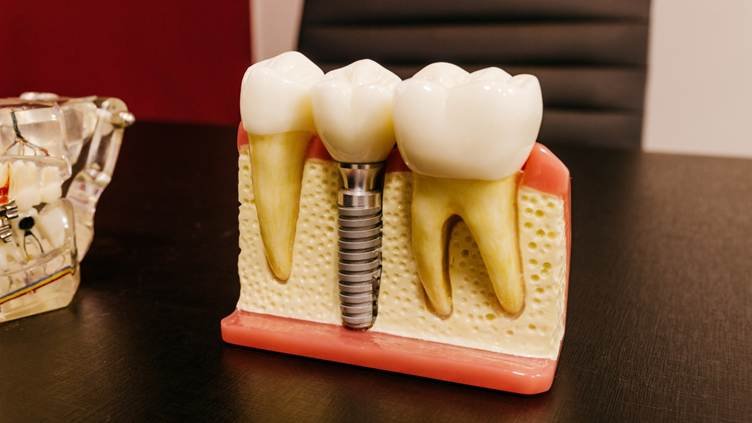
After an implant is placed, the surrounding bone undergoes a biological healing process known as osseointegration.
During this process, the bone gradually forms a connection with the implant surface. This provides the foundation needed to support the restoration.
The healing period can vary depending on factors including:
- Implant location
- Bone quality and quantity
- Number of implants
- Overall oral health
- Gum condition
- Whether additional procedures were performed
- Individual healing response
Your dentist will determine when the implant is ready for the next stage of treatment based on clinical evaluation and, when required, imaging.
How Is the Final Dental Restoration Placed?
Once adequate healing and implant stability have been achieved, the restoration stage can begin.
Depending on the treatment, an abutment may connect the implant to the restoration.
For a missing tooth, a custom dental crown may be used. When several teeth are missing, treatment may involve an implant-supported bridge or arch restoration.
The final restoration is planned according to the patient’s aesthetic requirements. The aim is to create a replacement that works appropriately with the surrounding teeth and bite.
Can Advanced Implant Dentistry Replace Multiple Teeth?
Yes. Implant treatment can be used for more than a single missing tooth.
Depending on the patient’s condition, implants may support:
- Crowns
- Implant-supported bridges
- Multiple-tooth restorations
- Full-arch implant-supported restorations
The number and position of implants depend on factors such as bone availability, gum health, bite, the location of missing teeth, and the design of the restoration.
For patients with upper-jaw bone loss, advanced implant approaches may sometimes be incorporated into a full-arch rehabilitation plan.
What Are the Benefits of Advanced Implant Dentistry?
The primary purpose of treatment is to provide a stable foundation for replacing missing teeth.
Depending on the treatment plan, implant-supported restorations may help:
- Restore chewing function
- Replace missing teeth with a restoration
- Improve the stability of tooth replacement
- Support a complete or partial dental restoration
- Reduce dependence on neighbouring natural teeth
- Provide a long-term tooth replacement option
The outcome depends on appropriate treatment selection, surgical planning, implant placement, restoration, healing, and long-term maintenance.
What Can You Expect During Recovery?
Some swelling, tenderness, or discomfort may occur after surgery. The extent can vary according to the complexity of the procedure and the number and type of implants placed.
Your dentist will provide post-treatment instructions covering areas such as:
- Food and diet
- Oral hygiene
- Medication
- Physical activity
- Follow-up appointments
- Warning signs that require attention
Following these instructions carefully can support proper healing.
Patients undergoing implant procedures may require a more individualized recovery plan because the surgical approach can be more complex than conventional implant placement.
How Do You Care for Dental Implants After Treatment?
Receiving an implant does not eliminate the need for oral hygiene.
The implant, restoration, surrounding gums, and remaining natural teeth all require care.
Maintain Daily Oral Hygiene
Brush your teeth regularly. Follow your dentist’s recommendations for cleaning around the implant and restoration.
Clean Between Teeth
Depending on the restoration, your dentist may recommend floss, interdental brushes, or other cleaning aids.
Attend Dental Visits
Follow-up appointments allow your dentist to evaluate the implant, restoration, gums, and surrounding teeth.
Protect Your Overall Oral Health
Gum inflammation, cavities, and other oral health problems should be addressed promptly to help maintain the health of your teeth and implant-supported restoration.
How Long Can Dental Implants Last?
Dental implants are designed as a long-term tooth replacement option. Their longevity is influenced by several factors.
These include:
- Oral hygiene
- Gum health
- Bite forces
- Lifestyle habits
- Quality of the restoration
- Regular dental care
- Maintenance of the implant and surrounding tissues
Regular dental examinations remain important even after the final restoration has been completed.
Who May Be a Candidate for Advanced Implant Dentistry?
Advanced implant dentistry may be considered for adults who have lost one or more teeth and require implant-supported tooth replacement.
However, having missing teeth does not automatically mean that a particular implant technique is suitable.
A detailed assessment is necessary to evaluate:
- Bone volume and quality
- Gum health
- Oral hygiene
- Remaining teeth
- Bite
- Anatomical structures
- Previous dental treatment
- Overall treatment requirements
For patients with severe bone loss, the assessment is particularly important because the treatment plan may involve conventional implants, bone augmentation, or an advanced anchorage technique such as zygomatic, pterygoid or nasal implants.
Why Is Individualized Planning Important at a Dental Clinic in Jayanagar?
Advanced implant dentistry involves connected stages from diagnosis and treatment planning to surgery, healing, restoration, and long-term maintenance.
There is no implant technique that is appropriate for every patient.
A detailed evaluation allows the dental team to consider the anatomy and discuss the possible treatment pathways. In such cases, the goal is to select an approach that balances anatomical suitability, restoration requirements, treatment complexity, and long-term oral health.
At iLUMNA Dental | Dr. Inchara Vadegadde, patients can discuss their missing teeth, bone condition, and implant treatment requirements and understand the options that may be appropriate for their individual situation.
What Should You Discuss Before Advanced Implant Treatment?
Before starting treatment, ask your dentist about:
- The type of treatment being considered
- The number of implants required
- Whether conventional implants are possible
- Whether bone grafting is necessary
- Whether advanced options such as zygomatic or pterygoid implants are appropriate
- Whether nasal implant techniques are relevant to your anatomy
- The expected treatment stages
- Healing and recovery requirements
- The type of final restoration
- Long-term maintenance
- Follow-up appointments
These questions can help you understand why a particular treatment approach has been recommended rather than assuming that one technique is suitable for everyone.
Conclusion
Advanced implant dentistry has expanded the treatment possibilities available for patients with missing teeth and challenging bone conditions. While conventional implants and bone grafting remain important treatment approaches, bone grafting is not necessarily the only option when there is severe bone loss.
Depending on the patient’s anatomy, solutions such as zygomatic implants, pterygoid implants, and nasal implants may be considered in carefully selected cases. These techniques rely on diagnosis, three-dimensional imaging, careful treatment planning, and appropriate clinical expertise.
If you are considering implant dentistry in Jayanagar, a comprehensive consultation at a dental clinic in Jayanagar can help determine the condition of your teeth, gums, and available bone and explain which implant options may be appropriate for your individual needs.
At iLUMNA Dental | Dr. Inchara Vadegadde, personalized implant treatment planning can help patients understand their available options and take informed steps toward restoring dental function and a complete smile.